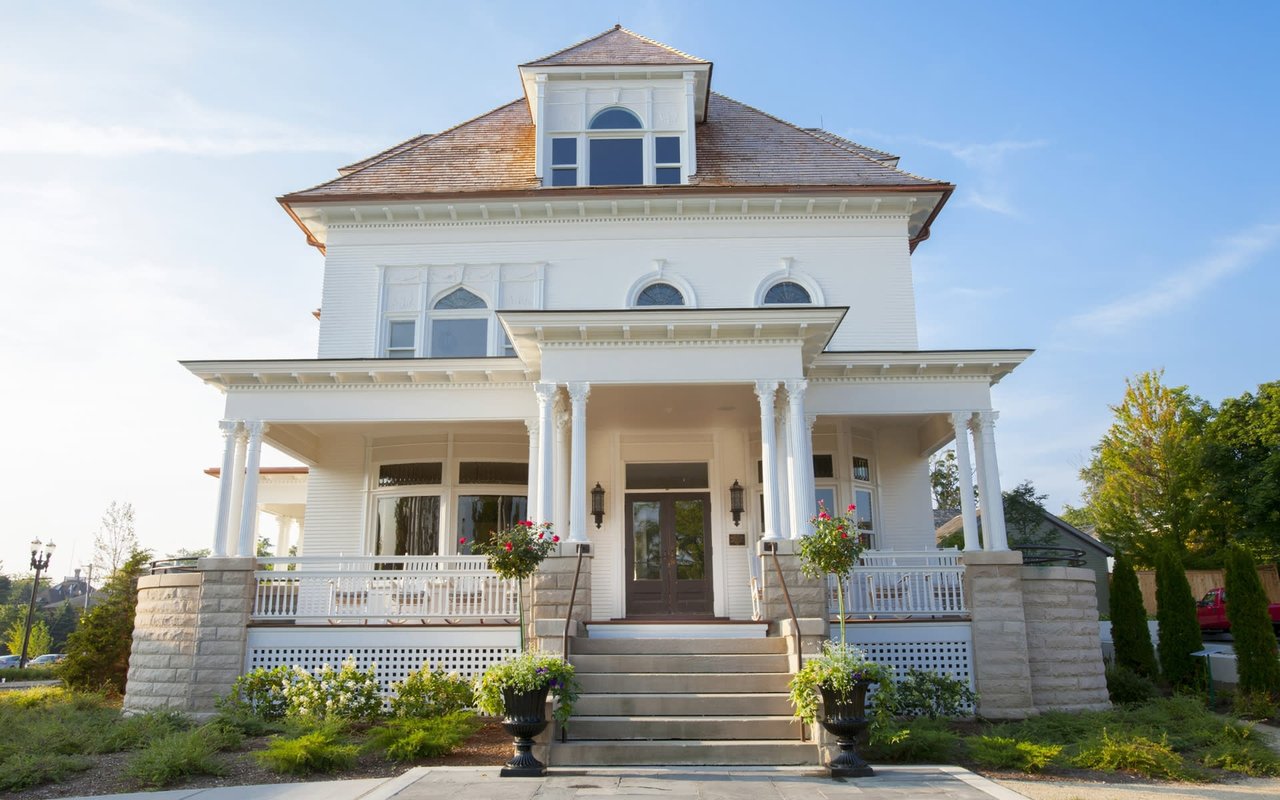
Barrington, IL traces its roots to a single decision by a 19th-century railroad engineer, and its identity today, part walkable train town, part horse-country estate community, still reflects that origin story. This history of Barrington, IL covers how a stop on the Chicago & North Western line grew into a village, then into a wider area made up of nine separate communities, all without losing the small-town character buyers still look for when house-hunting here today. John Morrison and the Morrison Home Team get asked about Barrington's backstory almost as often as they get asked about school districts, because understanding how a town grew usually explains why it looks the way it does now.
How Barrington Got Its Name
Barrington's name traces back to Great Barrington, a town in Berkshire County, Massachusetts. In the 1830s, families from Berkshire County, including the Willmarths, Kingsleys, and Watermans, settled the area alongside newcomers from New York and Germany. When local leaders organized the township in 1850, they named it after their ancestral home back east. Historians note there's no direct evidence anyone actually emigrated from Great Barrington itself, just from the surrounding county, but the name stuck.
The Railroad That Built Barrington
The real turning point came in 1854, when the Chicago & North Western Railway extended its line through the area. Robert Campbell, a civil engineer working for the railroad, bought a farm about two miles northwest of the existing Deer Grove station and platted a new community on the site. Deer Grove residents objected, so at Campbell's request, the railroad moved the station to its current location and renamed it Barrington, after Barrington Center back in Massachusetts.
The earliest structures, log homes, a schoolhouse, and grain shanties, went up around this new stop starting in 1846, in what was then called Barrington Station. The Illinois legislature granted the village its official charter on February 16, 1865, and Barrington's downtown has grown up around that same rail line ever since.
Local Tip: Barrington's Metra station still sits close to where those first log homes and grain shanties stood, which is part of why the downtown feels so walkable today.
A Farm Town Turns to Dairy and Cheese
Once the railroad gave local farmers a fast way to move goods into Chicago, Barrington's economy shifted. By the late 1800s, dairy farms and cheese factories had joined crops and livestock as the backbone of the local economy, and the village became a trading hub for the surrounding countryside. Local histories describe dairy farmers hauling milk into town in all weather, a detail that says a lot about how central agriculture was to daily life here well into the 20th century.
How Barrington Became Horse Country
In the late 19th and early 20th centuries, wealthy Chicago families started buying up farmland around Barrington for summer estates, close enough to the city for a day trip by horse and buggy, and later by car or train, but far enough to feel like the country. Many of these new owners kept their properties running as "gentlemen's farms," complete with hired farm managers. That era is where Barrington's horse country identity comes from, and it never really faded. The Riding Club of Barrington Hills, founded in 1937, still maintains a trail system across the area today, made possible by landowners who allow members to ride across their property.
Downtown's Landmark Buildings
Two buildings do a lot of the work of telling Barrington's architectural story, and both are still standing.
The Octagon House
Also known as the Hawley House, the Octagon House is an eight-sided, two-story residence built around 1860, likely by Joseph Brown. Its most distinctive features are the intricately carved brackets supporting the wraparound porch roof and the matching detailed screens along the foundation. It was added to the National Register of Historic Places on March 21, 1979.
The Catlow Theater
Wright Catlow built the Catlow Theater in 1927 to carry on a project his father had started with a 1916 auditorium commission. Architects Betts & Holcomb and Alfonso Iannelli designed the building in Tudor Revival style, and it's been showing movies in downtown Barrington for nearly a century. The Catlow was added to the National Register of Historic Places on August 21, 1989, and remains one of the more recognizable stops on any walk through downtown.
From One Village to Nine Communities
By the mid-20th century, suburban development pressure was creeping toward Barrington from Chicago, and many residents wanted to keep the area's rural, low-density character intact. Rather than let outside development set the terms, several surrounding areas incorporated as their own villages. Barrington Hills and Deer Park both incorporated in 1957, followed by North Barrington and South Barrington in 1959. Today, what people usually mean by "the Barrington area" actually spans nine separate communities, including Barrington Hills and South Barrington, each with its own zoning, character, and lot sizes, which is exactly why picking the right one matters so much for buyers.
The Train Line That Still Shapes Barrington Today
Barrington's original 1916 depot served Chicago & North Western commuter trains for decades, and the line was extended further out to Barrington by 1930 as Chicago's commuter rail network grew. Operations transferred to the Regional Transportation Authority, later rebranded as Metra, in 1974. A new station went up about half a mile south of the original site in 1977, and a 2003 renovation brought it up to date without changing its role as the anchor of downtown. Barrington sits on what's now Metra's Union Pacific Northwest Line, and that same rail corridor still shapes which blocks of downtown feel walkable and which don't.
What This History Means for Barrington Today
Barrington's split personality, dense, walkable downtown next to sprawling horse properties, isn't an accident. It's the direct result of a railroad stop that grew into a commercial center, surrounded by estate land that later organized itself into separate villages specifically to stay rural. That's why you can walk to the Catlow Theater and other downtown landmarks from the train platform, then drive ten minutes and find multi-acre horse properties in Barrington Hills. Buyers drawn to that estate lifestyle should take a look at Barrington's luxury homes for sale, while anyone weighing downtown versus a quieter outlying village should start with our list of things to do in Barrington to get a feel for both.
Frequently Asked Questions
When was Barrington, IL founded?
The first structures went up in 1846 around a new rail stop then called Barrington Station, the township organized in 1850, and the village received its official charter from the Illinois legislature in 1865.
Why is it called Barrington?
The name comes from Great Barrington, Massachusetts, home to many of the area's original 1830s settlers, who named their new community after their home back in the Berkshires.
Why are there so many separate Barrington villages?
Barrington Hills and Deer Park incorporated in 1957, followed by North Barrington and South Barrington in 1959, largely so residents could set their own zoning and preserve rural, low-density character as Chicago's suburbs expanded outward.
What historic buildings can you still visit in Barrington?
The Octagon House (built around 1860) and the Catlow Theater (built in 1927) are both on the National Register of Historic Places and still stand in or near downtown Barrington.
Is Barrington still horse country today?
Yes. The estate and "gentlemen's farm" tradition that began in the late 1800s continues through organizations like the Riding Club of Barrington Hills, founded in 1937, which still maintains riding trails across private land in the area.
Curious how Barrington's history shows up in today's market, from the walkable downtown to the horse properties in Barrington Hills? Morrison Home Team has been the top-selling team in Barrington real estate by closed volume since 2010 and can help you find the right corner of the area's history to call home. Reach out to the team to get started.