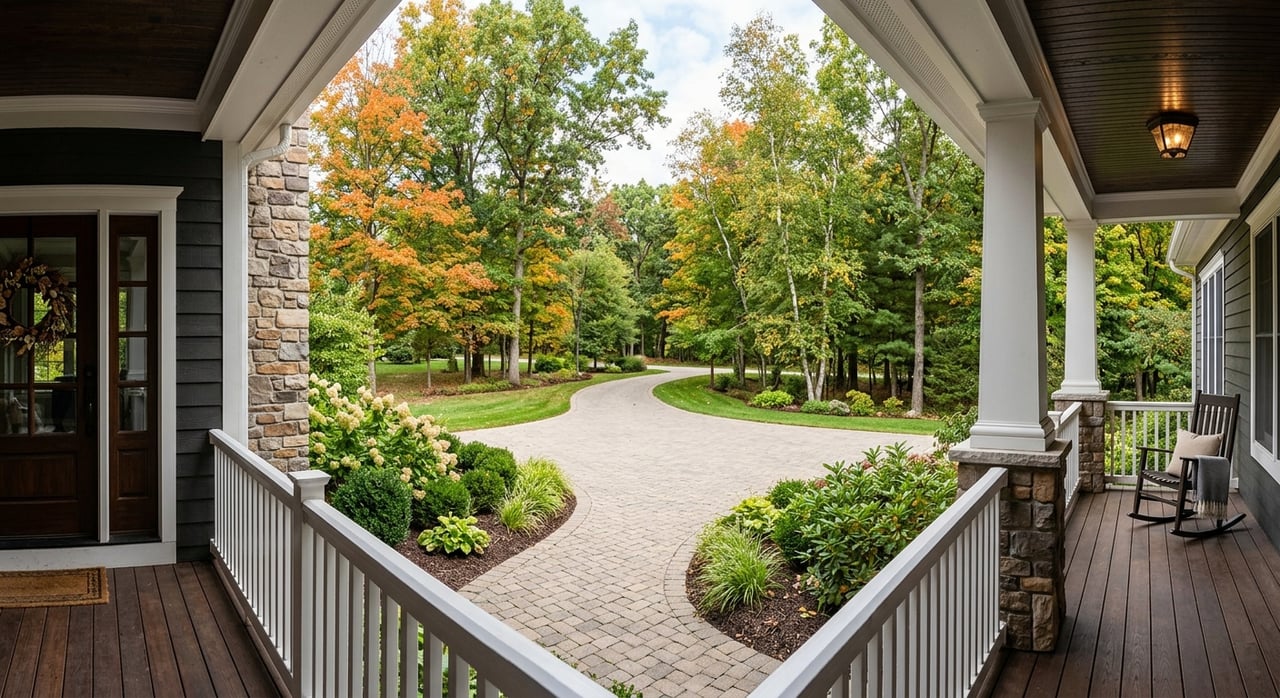
If you are drawn to Kildeer, chances are you want something many suburbs cannot offer at the same time: room to breathe and everyday convenience. That balance matters when you are choosing where to put down roots, especially if privacy, lot size, and access to shopping or commute routes all rank high on your list. In this guide, you will get a clear look at how Kildeer stacks up, where the tradeoffs show up in daily life, and what to verify before you buy. Let’s dive in.
Why Kildeer Feels Different
Kildeer is built around a low-density, privacy-first housing pattern. The village describes itself as a community in a natural setting, with about 4,000 residents and roughly 1,200 residences. CMAP data adds more context, showing that 98.8% of housing units are single-family detached and 98.7% are owner-occupied.
That housing mix shapes the experience of living there. You are not choosing between rows of dense subdivisions or large amounts of multifamily housing. In most cases, you are choosing among established residential enclaves where space, separation, and a quieter setting are part of the appeal.
Kildeer’s neighborhood structure reinforces that feel. The village highlights smaller and estate-style communities such as Sterling Manor with 10 lots, Meadowood Estates with 42 estate homes, Tall Oaks with 71 estate homes, and Sanctuary Club with 88 homes, including maintenance-free villas. For buyers, that often means limited turnover and fewer chances to enter a specific neighborhood when compared with more densely built suburbs.
What Privacy Looks Like in Kildeer
In practical terms, privacy in Kildeer often means detached homes, larger footprints, and less visual density from one property to the next. CMAP reports a median of 10 rooms, and 25.2% of homes have five or more bedrooms. That helps explain why buyers looking for elbow room often keep Kildeer on their shortlist.
Privacy also shows up in how the village has developed over time. With a median year built of 1992, much of the housing stock reflects a more established suburban pattern rather than newer high-density infill. If you want a setting that feels residential first and commercial second, Kildeer fits that description well.
For many buyers, that lower-density pattern supports more than aesthetics. It can also support a lifestyle built around working from home, spending more time on your property, and valuing a quieter day-to-day environment. CMAP notes that 40.3% of workers in Kildeer work from home, which is a meaningful share.
Where Access Comes Into Play
Privacy does not mean isolation. In Kildeer, much of the village’s convenience is centered along Rand Road. The village identifies The Shops at Kildeer, Quentin Collection, Kildeer Marketplace, and Kildeer Village Square as the main retail nodes.
That concentration matters because commercial land makes up just 3.6% of the village, according to CMAP. In other words, access exists, but it is contained rather than spread across the community. You can have shopping and dining nearby without changing the overall residential feel of most neighborhoods.
This is one of Kildeer’s strongest selling points. If you want upscale retail and dining close at hand, but you do not want to feel like you live in the middle of a commercial corridor, Kildeer offers a middle ground that can be hard to find.
Kildeer’s Daily-Life Tradeoff
Every suburb makes you choose something. In Kildeer, the main tradeoff is usually this: you gain space and a quieter setting, but you still live in a car-oriented environment. CMAP shows a mean commute of 30.1 minutes, which suggests a lifestyle that supports access but still depends heavily on driving.
That does not make Kildeer inconvenient. It just means convenience is selective. You may have strong access to shopping and dining along Rand Road, but many day-to-day routines will still depend on your specific route patterns, your work location, and which destinations matter most to you.
If you work remotely at least part of the week, Kildeer may feel especially well matched to your needs. If you make frequent daily trips in multiple directions, it is smart to test those drives before you commit.
How Kildeer Compares Nearby
The best way to evaluate Kildeer is to compare it with nearby options that shift the privacy-access balance in different ways. The right answer depends on how much built-in convenience you want and how much value you place on a more private residential setting.
Deer Park Offers More Built-In Access
Deer Park is the most access-oriented comparison in this group. The village says it has more than 100 shops and restaurants across Deer Park Town Center, Deer Park Plaza, Deer Park Promenade, and nearby Rand Road businesses. Deer Park Town Center alone includes more than 60 stores and restaurants at Rand Road and Long Grove Road.
Even with that retail presence, Deer Park still follows a one-family-per-acre planning model. CMAP shows 52.4% single-family residential land use and 8.6% commercial land use. If you want the strongest retail access of the nearby options, Deer Park may be worth a closer look.
Long Grove Leans More Private
Long Grove pushes further toward privacy, space, and a distinct village character. The village describes itself as intentionally designed around large lots, forests, conservation areas, and a pastoral atmosphere. It also has a historic downtown with about 120 businesses and nearby Metra access in Buffalo Grove.
CMAP shows a 33.5-minute mean commute and a 34.8% work-from-home share. That supports the idea that Long Grove often appeals to buyers who are willing to trade some convenience for a more private setting and a specific sense of place.
Hawthorn Woods Adds More Driving
Hawthorn Woods also fits the estate-style category, with many homes on one acre or more. The village highlights more than 600 acres of undeveloped land adjacent to state and county highways, and it points to the Midlothian Road corridor and other commercial areas as growth targets.
CMAP shows the longest mean commute of the group at 39.5 minutes. For buyers, that points to a stronger driving tradeoff. If your top priority is space and an estate-style feel, Hawthorn Woods may appeal, but it is important to weigh how often you want to be on the road.
What Pricing Suggests
Current market snapshots show that privacy-oriented communities continue to command meaningful prices. Recent three-month Redfin median sale prices place Long Grove at about $960,000, Kildeer at $873,000, Deer Park at $757,000, and Hawthorn Woods at $745,000.
Those numbers do not create a simple rule that larger lots always mean higher prices. Still, they do suggest that estate-oriented communities with stronger privacy appeal continue to hold a premium on a median basis. Kildeer sits in that higher-price conversation, which makes sense given its detached housing stock, roomier homes, and limited-density pattern.
For buyers, this matters in two ways. First, you should be ready for competition when the right property hits the market. Second, value in Kildeer is often tied to lifestyle fit as much as square footage alone.
What to Check Before You Buy
In Kildeer and similar estate-style suburbs, due diligence goes beyond finishes and floor plans. Infrastructure can vary from one area to the next, even between nearby properties. That is why utility questions should move to the top of your checklist early in the process.
Kildeer’s residential permit guidance states that sanitary sewer service is available only in certain areas, while other homes may require septic and well approvals. You should verify water, sewer, drainage, and any subdivision-specific rules before assuming a neighboring home has the same setup.
That step is especially important when you are comparing Kildeer with nearby towns. Utility patterns can vary by subdivision, corridor, and municipality. A home that feels similar on paper can involve very different ownership considerations once you look closer.
How to Decide if Kildeer Fits You
Kildeer tends to work best when you want a quieter residential feel without giving up nearby amenities. It can also be a strong fit if you prioritize detached homes, established neighborhoods, and a setting where privacy is part of the value proposition.
You may want to lean toward Kildeer if your wish list includes:
- A low-density community with mostly detached homes
- Access to shopping and dining without a heavily commercial feel
- A home that supports remote work or a hybrid routine
- A preference for established estate-style or small-enclave neighborhoods
- A location that feels residential first, with conveniences along key corridors
You may want to compare Kildeer more closely with Deer Park, Long Grove, or Hawthorn Woods if your priorities lean more strongly in one direction. Deer Park may suit you if retail access is your biggest priority. Long Grove may suit you if you want an even more private and pastoral setting. Hawthorn Woods may suit you if you are comfortable with more driving in exchange for an estate-style environment.
Why Local Guidance Matters
On paper, these towns can look similar. In real life, the differences show up in commute patterns, shopping access, neighborhood turnover, infrastructure, and how each community feels from one street to the next. That is where local market knowledge becomes especially valuable.
When you are buying in Kildeer, the goal is not just to find a house that checks the basics. It is to find the right version of privacy and access for your daily life, your budget, and your long-term plans. A thoughtful buying strategy can help you compare those tradeoffs clearly and move with confidence when the right property becomes available.
If you are thinking about a move in Kildeer or nearby northwest suburbs, the Morrison Home Team can help you compare neighborhoods, evaluate lifestyle tradeoffs, and navigate the buying process with clear local insight.
FAQs
What makes Kildeer, Illinois appealing for privacy-focused buyers?
- Kildeer stands out for its low-density housing pattern, with 98.8% detached homes, mostly owner-occupied housing, and established estate-style neighborhoods that support a quieter residential setting.
How convenient is daily life when buying a home in Kildeer?
- Kildeer offers everyday shopping and dining access along Rand Road, including several main retail centers, but it remains a car-oriented community with convenience concentrated in specific corridors.
How does Kildeer compare with Deer Park for homebuyers?
- Kildeer generally offers a quieter, more privacy-focused residential feel, while Deer Park offers stronger built-in retail and restaurant access with a more access-oriented layout.
How does Kildeer compare with Long Grove for privacy and access?
- Both communities lean toward privacy, but Long Grove tends to push further toward large-lot character and a pastoral setting, while Kildeer offers a somewhat stronger balance between privacy and nearby shopping access.
What should buyers verify before purchasing a home in Kildeer?
- Buyers should confirm water, sewer, drainage, and any subdivision-specific utility requirements, since sanitary sewer service is only available in certain areas and some homes may involve septic or well approvals.
Is Kildeer a good fit for remote or hybrid workers?
- It can be, especially since CMAP reports a 40.3% work-from-home share, which suggests the community appeals to many households that value home-centered daily living and a quieter setting.