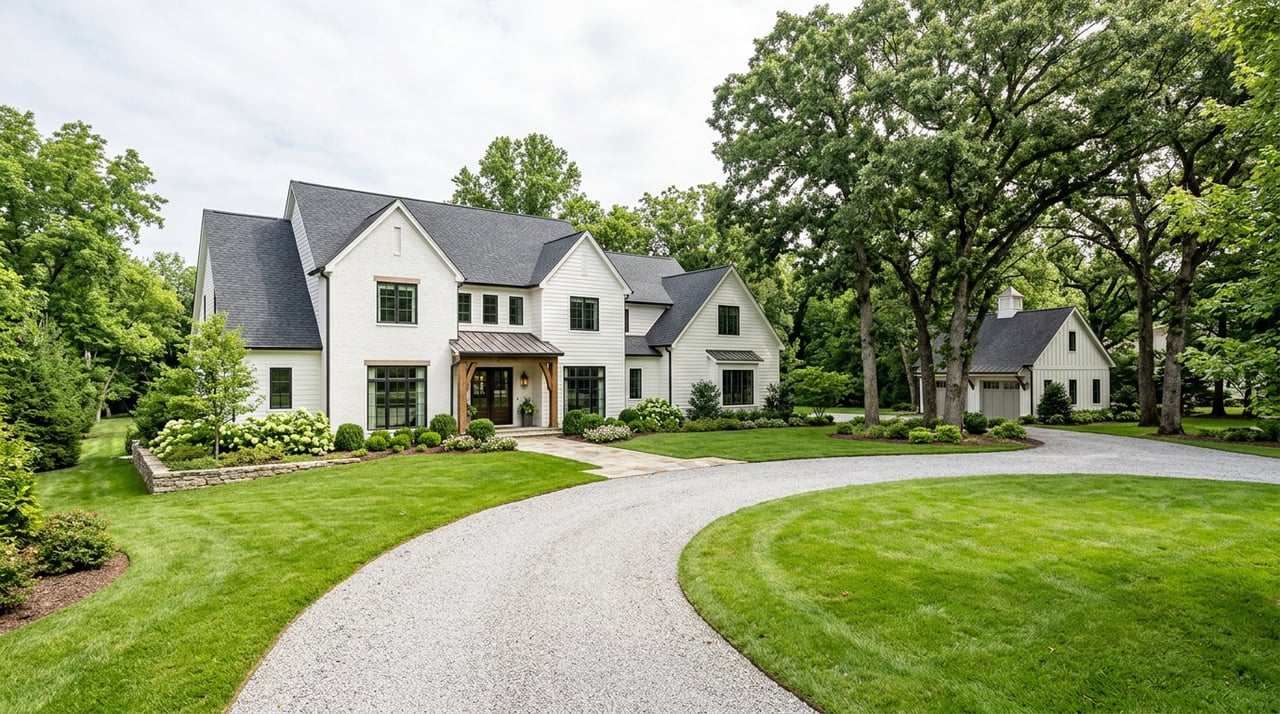
Looking for privacy, room to breathe, and a home that truly fits your life? Hawthorn Woods offers the space and setting many luxury buyers want, with a strong track record of estate-style living. You may be weighing lot size, zoning, wells and septic, and long-term value before you decide. In this guide, you’ll learn what luxury means here, how local rules shape value, the due diligence steps smart acreage buyers take, and how Hawthorn Woods stacks up against nearby options. Let’s dive in.
Why Hawthorn Woods for luxury and land
Hawthorn Woods protects a low-density, “country-like” character through planning and zoning. The village’s official maps and plans reinforce that identity, which helps preserve privacy and open space over time. You can review the village’s planning resources on the Zoning Maps and Information page.
Two rules stand out for acreage buyers. First, the minimum lot area for one-family homes on water and sewer is 40,000 square feet (about 0.92 acres). Second, maximum lot coverage in the R-1 district is 15 percent, and accessory buildings have height limits. These standards limit density and building footprints, supporting the estate feel many buyers value. You can read these standards in the Hawthorn Woods municipal code.
Market snapshot and what “luxury” means
As of January 2026, vendor snapshots place the typical single-family price in Hawthorn Woods around $700k to $840k. Because the median sits under $1 million, local buyers often view $1M+ as the luxury tier. You will find many custom homes and lakefront or golf-adjacent properties in this segment.
Typical homes and lots
Many neighborhoods feature 0.9 to 1.2 acre lots, often with Traditional, Neo-Colonial, French-Provincial, Tudor, or newer custom designs. True multi-acre parcels exist but are less common and usually command a premium, especially if lakefront. Architectural variety and larger footprints are part of the draw for move-up and estate buyers.
Zoning and utilities that shape value
Local zoning and planning aim to keep Hawthorn Woods low density. The 40,000 square foot minimum lot area, 15 percent lot coverage limit, setbacks, and accessory height rules all work together to preserve open space. These controls support long-term scarcity for larger parcels, which can help resale value for homes that emphasize privacy and land. See the specific provisions in the municipal code.
Not every property has the same utility setup. Some areas have public or regulated water and sewer, while others rely on private wells and onsite septic. Always verify a property’s service area and system type, because utilities affect development potential, ownership costs, and financing. Lake County’s Health Department offers guidance and testing resources on private wells and onsite wastewater systems.
Watch the policy horizon
State-level zoning reform has been discussed that could loosen some local controls, including minimum lot sizes and accessory dwelling rules. As reported in early 2026, the proposal is political and would require state legislation, so it is not in effect. For now, local code remains in force, but it is smart to monitor updates. You can read a summary of the proposal in this news report.
Acreage buyer due diligence checklist
When you buy a larger parcel or estate in Hawthorn Woods, a clear plan protects your investment. Use this checklist to focus your inspections and records requests.
Title, boundaries, and survey
- Order an up-to-date ALTA or owner’s survey and confirm legal boundaries and any recorded easements.
- Review plat notes for outlots, common areas, and any conservation or scenic restrictions. The village’s planning pages are a good starting point for maps and references on zoning and plats.
Wells, septic, and utility confirmations
- Private well: arrange a water quality panel and flow test at a minimum. Lake County provides testing guidance and kits on its private wells page.
- Septic: request county septic permits and plans. For larger or older homes, schedule a full system inspection with pumping and a review of drain field and reserve area. Learn the process and records access on the county’s Onsite Wastewater page.
- Ask for maintenance records, including pumping receipts and any service logs for aerobic treatment units. Replacement on constrained sites can be very costly, so documentation matters.
Soils, perc, and site buildability
- If prior soils work is not available, hire a licensed soil scientist for a site evaluation. Soil type and water table can drive design and cost for septic and foundations. Lake County’s OWTS group can point you to qualified professionals on its Onsite Wastewater page.
Floodplain, wetlands, and stormwater rules
- Check the property’s FEMA panel and Lake County overlays. The county’s updated Flood Insurance Study is available here: 2023 Lake County FIS.
- If wetlands or hydric soils appear on or near the site, get a professional delineation before assuming buildable area. Review local permitting standards in the Watershed Development Ordinance.
Easements, private roads, and HOAs
- Confirm who maintains private drives, bridges, and shared infrastructure. Look for recorded maintenance agreements or HOA covenants.
- Village and subdivision files often note private rights-of-way. Start with the village’s zoning and mapping resources and your title company’s document set.
Outbuildings, accessory units, and uses
- Hawthorn Woods limits accessory building height and total lot coverage. Verify that barns, shops, or converted spaces were permitted and meet current code. See accessory standards in the municipal code.
- If you plan a guest suite or separate living space, confirm whether the lot’s septic or well capacity and zoning will allow it.
- For horse-related plans, know that nearby Barrington Hills is built for equestrian estates, with five-acre minimums in many districts. Review its standards in the Barrington Hills code and compare against Hawthorn Woods before you commit.
Environmental and tree preservation
- Some plats or approvals include conservation easements or tree preservation notes. Check recorded documents and the village’s planning materials on zoning and open space.
Mechanical systems and outbuilding inspections
- For barns or pole buildings, inspect slab or foundation, electrical service size, and any plumbing or waste handling. Confirm whether any living areas in outbuildings were permitted.
- Cross-check village or county permit history and, where relevant, septic approvals via Lake County’s Onsite Wastewater page.
Taxes, assessments, and SSAs
- Review the parcel’s tax history and whether it sits in a Special Service Area. Some areas carry assessments for infrastructure that affect carrying costs. See an example map for a local SSA here.
How Hawthorn Woods compares nearby
Barrington Hills - equestrian estates
Barrington Hills is known for very large-lot and equestrian living, with five-acre minimums common in significant areas. If your priority is a multi-acre horse property and long-term seclusion, it is a strong fit. Expect a higher price per acre and limited inventory relative to Hawthorn Woods. You can verify its zoning approach in the Barrington Hills code.
Kildeer - substantial lots and access
Kildeer offers sizable lots with conservative planning and a mix of custom neighborhoods. Median values often land in the upper hundreds, depending on neighborhood and date. Buyers who want larger lots with convenient access to nearby amenities often compare Kildeer and Hawthorn Woods side by side.
Long Grove - village charm and acreage
Long Grove blends a historic village center with estate neighborhoods. Depending on location, you will find both planned developments and larger rural lots. Median prices often meet or exceed Hawthorn Woods, with options that range from village-center convenience to private acreage.
Buying with confidence
Acreage buying rewards careful verification. When you understand lot standards, utilities, environmental factors, and maintenance realities, you avoid surprises and protect long-term value. If you want a partner who knows the codes, the parcels, and the process, the Morrison Home Team offers concierge-level buyer representation, deep local expertise, and proven experience with luxury and estate transactions.
FAQs
What defines a luxury home in Hawthorn Woods?
- Because the median home value sits below $1 million, many buyers consider properties $1M+ with custom finishes, larger footprints, or premium settings to be luxury.
What is the minimum lot size in Hawthorn Woods?
- For one-family homes on water and sewer, the minimum lot area is 40,000 square feet and maximum lot coverage in R-1 is 15 percent, per the municipal code.
Do all Hawthorn Woods homes have public water and sewer?
- No. Some areas use public or regulated systems, while others rely on private wells and septic. Verify service type early and use Lake County’s guidance on testing and permits.
How do I check floodplain or wetland issues on a property?
- Review the county’s updated FEMA Flood Insurance Study and the Watershed Development Ordinance, then order a site-specific wetlands delineation if needed.
Can I add a guest house or barn apartment on my lot?
- It depends on zoning, lot coverage, accessory height limits, and septic or well capacity. Confirm requirements in the municipal code and with Lake County for wastewater.
How does Hawthorn Woods compare to Barrington Hills for horse properties?
- Barrington Hills is purpose-built for equestrian estates, with many areas requiring five-acre minimum lots. Hawthorn Woods offers space but is less equestrian-focused.