Wondering whether Deer Park fits the way you actually want to live? If you are looking for more space, a quieter setting, and a home base in the northwest suburbs with easy access to shopping and commuter routes, Deer Park may be worth a serious look. This guide walks you through the lifestyle, housing options, and commute realities so you can decide whether Deer Park lines up with your priorities. Let's dive in.
What Deer Park Feels Like
Deer Park is a small village in Lake and Cook counties, located east of Barrington and south of Lake Zurich. According to the Village of Deer Park, it sits about 35 to 37 miles northwest of downtown Chicago, and the village's 2025 to 2030 strategic plan cites a population of 3,681.
What stands out most is the village's intentionally low-density character. The Planning and Zoning Commission notes that Deer Park is generally planned at one family per acre, with most homes on one-acre lots and long-term planning focused on preserving rural character, open space, and a green-belt feel.
If you are drawn to privacy, mature landscaping, and a less crowded suburban layout, that identity will likely appeal to you. If you want a compact downtown or a more walkable urban-suburban grid, Deer Park may feel quieter and more spread out than what you have in mind.
Deer Park Lifestyle Perks
One of Deer Park's biggest lifestyle advantages is that it blends residential calm with convenient retail and dining. The village highlights Deer Park Town Center at Rand and Long Grove Roads as home to more than 60 retail shops and restaurants in a landscaped setting, along with Deer Park Plaza, Deer Park Promenade, and other nearby Rand Road businesses.
That means your day-to-day routine can feel easier than you might expect in a low-density community. You can enjoy a more open residential setting while still having shopping, dining, and seasonal events close by.
The village also points to year-round activities such as summer concerts, art fairs, country markets, and winter fireworks at Town Center. For many buyers, that mix creates a practical middle ground between peaceful surroundings and built-in local activity.
Outdoor Space Matters Here
If outdoor access is high on your list, Deer Park has a lot to offer. The village's outdoor spaces overview lists amenities including baseball and soccer fields, tennis and pickleball courts, walking trails, ponds, wetlands, and playgrounds across community spaces such as Charles E. Brown Park, Vehe Farm Park, and Town Center Park.
The same village resources also highlight Cuba Marsh Forest Preserve for hiking, bicycling, and cross-country skiing. Deer Park's identity is closely tied to open space, and that shows up in both its planning and its recreation options.
For buyers who value room to spread out, scenic surroundings, and access to nature without going far from home, this is one of the village's strongest selling points. It is a lifestyle that leans more toward space and landscape than constant activity.
Daily Convenience and Services
Deer Park is residential first, but it still covers many practical needs well. Shopping and dining are part of the local routine, and for library services, the village lists the Barrington Area Library as its community resource.
This setup works especially well if you are comfortable driving for errands and appointments. Deer Park is not built around doing everything on foot, but it does offer a convenient base in a well-connected part of the northwest suburbs.
What Homes Look Like in Deer Park
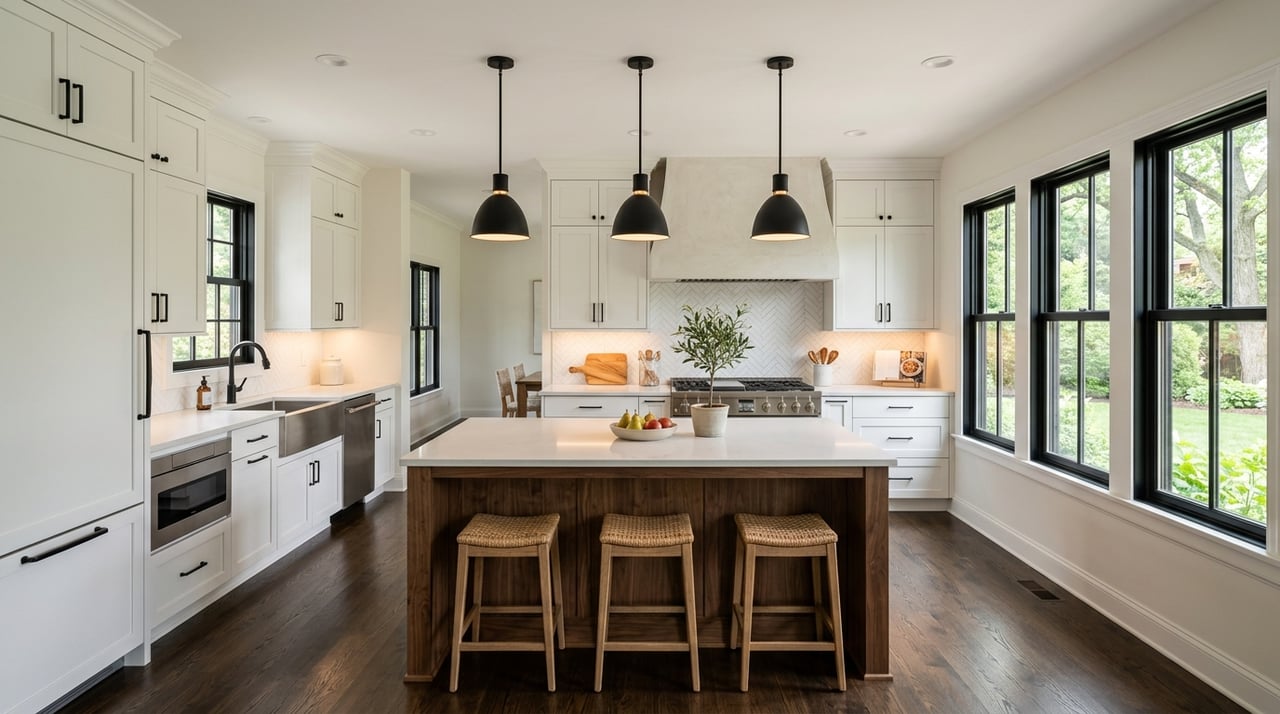
From a housing perspective, Deer Park is still largely a larger-lot single-family market. The village's 2023 comprehensive plan says most of the housing stock consists of large single-family homes with three to five bedrooms, 52.3% of the housing stock was built between 1970 and 1999, and 88.4% of occupied homes are owner-occupied.
That profile gives you a good sense of what to expect. Many homes are designed for buyers who want more square footage, more land, and a more established neighborhood feel rather than a dense mix of housing types.
The same plan lists a median home value of $527,500 as a planning baseline. More current market trackers in the research suggest values now sit in a higher range overall, which reflects both the area's property mix and the variation between lot sizes and home styles.
Price Range and Market Reality
If you are trying to budget for Deer Park, it helps to think in ranges rather than one number. The research report shows current estimates clustering in the mid-$600,000s to low-$700,000s for a typical home, though actual prices vary meaningfully by size, condition, lot, and property type.
The report cites Zillow's home value index at $725,397, Realtor.com showing a median listing price of $679,000 and a median home price of $685,000, and Redfin reporting a February 2026 median sale price of $569,000 with 75 days on market. Recent sales cited in the report span from $600,000 to $1.225 million, which shows how broad the range can be in Deer Park.
For you as a buyer, the takeaway is simple: Deer Park can support both move-up budgets and upper-end purchases. If you are comparing homes here, details like lot size, updates, setting, and privacy can have a major impact on value.
Are There Townhomes or Lower-Maintenance Options?
Yes, but they are more limited than in many nearby suburbs. The village's comprehensive plan identifies Deer Park Crossing as the main newer attached-housing option, describing it as a 236-unit luxury townhome and apartment complex on more than 11 acres near wetlands and nature trails, within a five-minute walk of Town Center.
Units there range from one to three bedrooms and include attached garages and shared amenities. That gives some buyers a lower-maintenance entry point, but overall Deer Park still reads as a predominantly single-family, larger-lot community.
If you want attached housing, Deer Park may still work for you, but the selection will likely be narrower. If your priority is a detached home with land and privacy, the village aligns more directly with that goal.
Schools and Boundaries
Deer Park is served by two public school districts: Barrington Community Unit School District 220 and Lake Zurich Community Unit School District 95. The key detail for buyers is that school assignment is address-specific, so it is important to verify boundaries by property rather than assume one district applies village-wide.
District 95 states that attendance is determined by home address and provides an address lookup map. According to the district's overview page, District 95 serves Lake Zurich, Deer Park, Hawthorn Woods, Kildeer, unincorporated Lake County, and North Barrington, with 2025 to 2026 enrollment of 5,762.
Barrington 220 serves about 8,000 students from all or part of Deer Park and surrounding communities, according to the research report. If schools are part of your decision, verifying the exact address early can save time and help you narrow your search.
Commute and Transportation
Deer Park is a car-oriented community, but access to major roads is one of its practical strengths. The village's transportation page says Rand Road and Lake-Cook Road connect to U.S. 53 and I-90, while Hough Street, Northwest Highway, Ela Road, Long Grove Road, Quentin Road, and Cuba Road are additional key routes.
For rail commuters, the nearby Barrington Metra station offers daily and permit parking, along with a shuttle bus connection between Lake Zurich and Barrington. The village also notes that O'Hare is about 30 minutes southeast and Midway about 60 minutes south.
In real-life terms, Deer Park works best if you are comfortable with driving as part of everyday life. If you need quick highway access, occasional rail options, and reasonable airport reach, it checks a lot of important boxes.
Who Deer Park Fits Best
Deer Park tends to make the most sense for buyers who want a quieter, more wooded suburban setting with larger homes and more breathing room. It is especially appealing if you value privacy, open space, and convenient access to retail without giving up a more residential feel.
It may be a strong fit if you are looking for:
- A low-density setting with one-acre-style spacing
- Larger single-family homes
- Nearby shopping and dining without living in a dense commercial area
- Parks, trails, wetlands, and preserve access
- Straightforward road access for commuting around the northwest suburbs and into Chicago
It may be less ideal if you are hoping for:
- A highly walkable downtown environment
- A wide range of condo or attached housing choices
- A lifestyle built around public transit rather than driving
Final Thoughts on Deer Park
If your ideal suburb includes space, privacy, established homes, and easy access to everyday conveniences, Deer Park deserves a close look. Its mix of larger lots, open space, shopping access, and commuter connectivity gives it a distinct place among northwest suburban communities.
The right fit always comes down to how you want to live, not just what a listing says on paper. If you want expert help comparing Deer Park with nearby communities or finding the right home for your lifestyle, connect with the Morrison Home Team.
FAQs
Is Deer Park, IL a good fit if you want a quiet suburban lifestyle?
- Deer Park is designed as a low-density village with most homes on one-acre lots, open space, and a more private residential feel.
What kinds of homes are common in Deer Park, IL?
- Most housing in Deer Park consists of larger single-family homes, often with three to five bedrooms, with more limited attached-housing options.
Are there townhomes or lower-maintenance homes in Deer Park, IL?
- Yes, but they are limited compared with many suburbs, with Deer Park Crossing standing out as the main newer attached-housing option.
How much do homes cost in Deer Park, IL?
- Based on the research report, Deer Park home values and prices generally fall from the mid-$600,000s to low-$700,000s for a typical home, though actual prices can range much higher or lower depending on the property.
Which school districts serve Deer Park, IL homes?
- Deer Park is served by Barrington Community Unit School District 220 and Lake Zurich Community Unit School District 95, and school assignment should be verified by specific address.
How do most people commute from Deer Park, IL?
- Most residents rely on driving, with access via Rand Road, Lake-Cook Road, U.S. 53, and I-90, while the nearby Barrington Metra station provides a rail option for some commuters.
Is Deer Park, IL close to shopping and restaurants?
- Yes, Deer Park Town Center, Deer Park Plaza, Deer Park Promenade, and nearby Rand Road businesses provide a strong local mix of retail and dining options.